



When women are least fertile is a common question for people who want to understand the menstrual cycle, plan a pregnancy, or better understand how fertility changes throughout the month.
The short answer is that fertility is generally lowest outside the fertile window, especially after ovulation has occurred and several days have passed. However, there is no single day of the month when every woman is guaranteed to be infertile. Ovulation can happen earlier or later than expected, and sperm can survive in the reproductive tract for several days.
For this reason, counting calendar days alone cannot reliably identify a completely “safe” time to avoid pregnancy.
This guide explains when women are least fertile, how ovulation affects fertility, what happens during each stage of the menstrual cycle, and why fertility timing can vary from person to person.
What Does “Least Fertile” Mean?
Being least fertile means that the chance of pregnancy is lower because an egg is not available for fertilization and the body is outside the fertile window.
A person is usually most fertile during the several days leading up to ovulation and around the day of ovulation. After ovulation, the egg typically remains capable of being fertilized for only a short period.
However, “least fertile” does not necessarily mean “cannot become pregnant.”
Menstrual cycles are not perfectly predictable. Stress, illness, travel, changes in sleep, weight changes, breastfeeding, hormonal conditions, and other factors can affect when ovulation occurs.

Therefore, someone who is trying to prevent pregnancy should not assume that a particular calendar day is completely risk-free.
When Are Women Least Fertile?
In general, women are least fertile after ovulation has passed and during the later part of the menstrual cycle, before the next period begins.

The fertile window usually includes:
- The several days before ovulation
- The day of ovulation
- A short period immediately after ovulation
Once ovulation has occurred and the egg is no longer viable, the probability of conception drops significantly.
For example, in a predictable 28-day cycle, ovulation is often estimated to occur around day 14. In that example, fertility would generally be highest around the middle of the cycle and lower later in the cycle.
But this is only an example. A 28-day cycle is not a universal standard, and ovulation does not always occur on day 14.

Simple Fertility Timeline
| Cycle stage | General fertility level |
| During menstruation | Usually low, but pregnancy is possible |
| Shortly after menstruation | Often low, but fertility may increase |
| Several days before ovulation | Increasing to high |
| Around ovulation | Highest |
| Immediately after ovulation | Drops quickly |
| Several days after ovulation | Generally very low |
| Before the next period | Generally low |
The important point is that fertility depends more on the timing of ovulation than on a specific calendar date.
Why Is Fertility Lowest After Ovulation?
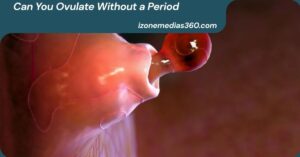
Ovulation is the release of an egg from an ovary.
Once released, the egg has a relatively short lifespan. If fertilization does not occur during that period, the egg breaks down and cannot normally be fertilized later in the cycle.
This creates an important difference between the days before ovulation and the days after ovulation.
Before ovulation, sperm may remain in the reproductive tract for several days under favorable conditions. This means pregnancy can occur even if intercourse happens several days before ovulation.
After ovulation, however, the opportunity becomes much shorter because the egg is available for fertilization only briefly.
This is why the days after confirmed ovulation are generally considered the least fertile part of the cycle.
Can You Get Pregnant During Your Period?
Yes. Although pregnancy during a period is generally less likely than during the fertile window, it is possible.
Several factors explain why.
First, some women have short menstrual cycles. If ovulation happens soon after menstruation ends, sperm from intercourse during the later days of a period could potentially still be present when ovulation occurs.
Second, not all bleeding is necessarily a menstrual period. Spotting or bleeding between periods can sometimes be mistaken for menstruation.
Third, cycle timing can change from month to month.
Therefore, having a period does not provide a guarantee that pregnancy cannot occur.
Are You Least Fertile During Your Period?
Menstruation is often associated with lower fertility, but it is not necessarily the least fertile time for everyone.
During menstruation, the uterine lining is being shed. Ovulation has usually not occurred yet. If ovulation is still many days away, the chance of conception is generally low.
However, the risk can be higher for someone who:
- Has a short menstrual cycle
- Has irregular cycles
- Ovulates earlier than expected
- Experiences bleeding that is not actually a period
- Has unpredictable cycle timing
The difference between “low fertility” and “no fertility” is important.
When Are Women Most Fertile?
Women are generally most fertile during the fertile window surrounding ovulation.
The fertile window exists because sperm can survive for several days inside the female reproductive tract, while the egg remains viable for a much shorter time after ovulation.
This means the fertile window starts before ovulation rather than only on the day of ovulation.
For someone trying to become pregnant, intercourse in the days leading up to ovulation can be particularly important because sperm may already be present when an egg is released.
Understanding the Menstrual Cycle
The menstrual cycle is controlled by changes in reproductive hormones.
Although cycles are often described as four stages, the exact timing differs between individuals and can change from one cycle to another.
The main stages are:
- Menstruation
- Follicular phase
- Ovulation
- Luteal phase
Understanding these stages makes it easier to understand when women are least fertile.
1. Menstruation
Menstruation is the bleeding phase of the cycle.
The first day of menstrual bleeding is commonly considered day one of the menstrual cycle.
During this stage, hormone levels are relatively low, and the uterine lining is shed.
Fertility is usually low during menstruation, but it is not impossible to become pregnant.
This is especially important for people with short or irregular cycles.
2. Follicular Phase
The follicular phase begins on the first day of menstruation and continues until ovulation.
During this phase, follicles in the ovaries develop. One follicle usually becomes dominant and prepares to release an egg.
Estrogen levels generally rise as the follicle develops.
The length of the follicular phase can vary significantly between women and even between cycles in the same person.
This is one reason why predicting ovulation from the calendar alone can be difficult.
3. Ovulation
Ovulation occurs when an ovary releases an egg.
A rise in luteinizing hormone, often called LH, triggers ovulation.
Ovulation is the key event that determines the fertile window.
If sperm is present around the time of ovulation, fertilization may occur.
Ovulation does not necessarily happen on the same cycle day every month. It can shift because of many biological and lifestyle factors.
4. Luteal Phase
The luteal phase begins after ovulation.
During this phase, the body produces hormones that help prepare the uterus for a possible pregnancy.
If fertilization and implantation do not result in pregnancy, hormone levels eventually fall and menstruation begins.
After ovulation has definitely occurred and the fertile window has passed, fertility becomes very low.
Is There a “Safest” Time to Avoid Pregnancy?
There is no universally guaranteed safe day for avoiding pregnancy without contraception.
People sometimes refer to certain days as “safe days,” but this term can be misleading.
A person may have a regular cycle for several months and then experience a cycle in which ovulation occurs earlier or later.
If ovulation occurs earlier than expected, days previously believed to be low-risk may actually fall within the fertile window.
For this reason, fertility awareness methods require more than simply counting days on a calendar.
Why Calendar Counting Can Be Unreliable
Calendar calculations assume that ovulation follows a predictable pattern.
Real menstrual cycles are more complicated.
For example, imagine someone normally has a 28-day cycle. They might assume ovulation occurs around day 14 every month.
But if ovulation occurs on day 11 during one cycle, the fertile window shifts earlier.
If ovulation occurs on day 18, the fertile window shifts later.
Factors that may influence cycle timing include:
- Stress
- Illness
- Changes in sleep
- Travel
- Major changes in exercise
- Significant weight changes
- Breastfeeding
- Hormonal changes
- Perimenopause
- Certain medical conditions
- Stopping or changing hormonal birth control
This variability makes calendar-only predictions less dependable.
Can Ovulation Happen Earlier Than Expected?
Yes.
Ovulation can occur earlier than someone expects based on their usual cycle length.
This is one reason pregnancy can occasionally happen soon after a period.
A person may assume that they are far from ovulation when they are actually approaching their fertile window.
This is particularly relevant for people with short menstrual cycles.
Can Ovulation Happen Later Than Expected?
Yes.
Ovulation can also happen later than expected.
A late ovulation can make the cycle longer than usual.
Stress, illness, hormonal changes, travel, and other factors can contribute to changes in ovulation timing.
This means a late period does not necessarily mean that ovulation happened at the usual time.
Does a Longer Cycle Mean More Low-Fertility Days?
Not necessarily.
A longer cycle can have more days before ovulation, but the timing of ovulation can still vary.
For example, one person may regularly have a longer follicular phase, while another may have irregular ovulation.
The important fertility event is ovulation rather than simply the number of days in the cycle.
Does a Short Cycle Mean Fewer Low-Fertility Days?
Potentially.
People with shorter cycles may ovulate relatively soon after menstruation.
Because sperm can survive for several days under favorable conditions, the fertile window may overlap with the end of menstrual bleeding or the days immediately afterward.
This is why short cycles deserve special attention when someone is trying to avoid pregnancy using cycle timing.
What Happens to Fertility After Ovulation?
After ovulation, fertility declines rapidly.
The released egg remains available for fertilization for only a limited period.
If fertilization does not happen, the egg degenerates.
As more time passes after ovulation, the likelihood of conception from intercourse becomes very low.
However, accurately knowing that ovulation has already occurred is important.
Simply assuming that ovulation happened because of a calendar prediction is not the same as confirming it.
How Can You Tell When Ovulation Happens?
Several methods can provide information about ovulation.
Common fertility awareness tools include:
Menstrual Cycle Tracking
Tracking the start and end of periods can help identify patterns.
Over several cycles, a person may learn whether their periods are relatively regular or variable.
However, period tracking alone does not directly confirm ovulation.
Ovulation Predictor Kits
Ovulation predictor kits detect luteinizing hormone in urine.
An LH surge usually happens shortly before ovulation.
These tests can help identify when ovulation may be approaching.
They are generally more useful for predicting ovulation than for proving that ovulation has already happened.
Cervical Mucus Changes
Cervical mucus changes throughout the cycle.
Around the fertile window, it may become wetter, clearer, and more slippery.
These changes can provide useful information about approaching fertility.
Learning to recognize cervical mucus patterns can be part of a fertility awareness method.
Basal Body Temperature
Basal body temperature, or BBT, is the body’s resting temperature measured under consistent conditions, usually immediately after waking.
After ovulation, progesterone causes a small rise in basal body temperature.
A sustained temperature shift can provide evidence that ovulation has already occurred.
However, BBT generally confirms ovulation after the event rather than predicting it precisely beforehand.
Which Method Is Best?
No single method works perfectly for everyone.
For fertility awareness, some people combine several signs, such as:
- Cycle length
- Cervical mucus
- Basal body temperature
- Ovulation tests
- Other physical observations
Using multiple signs can provide a clearer picture than relying on one measurement.
However, people who strongly need to prevent pregnancy should consider using a reliable contraceptive method rather than relying only on predicted “least fertile” days.
When Women Are Least Fertile: A 28-Day Cycle Example
Consider a hypothetical person with a regular 28-day cycle.
A simplified example might look like this:
- Days 1–5: Menstruation
- Days 6–9: Lower fertility
- Days 10–15: Fertility increasing or high
- Around day 14: Possible ovulation
- Days 16–28: Fertility generally decreases after ovulation
This example is useful for understanding the basic concept, but it should not be treated as a personal fertility calendar.
Someone with a 28-day cycle may ovulate earlier or later than day 14.
When Women Are Least Fertile With Irregular Periods
Irregular periods make fertility timing harder to predict.
If cycle length changes significantly from month to month, calendar calculations become less reliable.
For example, someone might have cycles lasting 25 days one month and 35 days the next.
In this situation, assuming ovulation always occurs at the same time could lead to incorrect conclusions about fertility.
People with irregular cycles who are concerned about pregnancy or fertility may benefit from discussing their cycle pattern with a healthcare professional.
Does Age Affect Fertility?
Yes.
Fertility changes with age, particularly because the number and quality of eggs decline over time.
However, age-related changes should not be confused with individual cycle timing.
A person can still ovulate and become pregnant during the reproductive years even when fertility has begun to decline.
Pregnancy can also occur during perimenopause because ovulation may continue unpredictably.
Therefore, someone approaching menopause should not assume that irregular periods mean pregnancy is impossible.
Is Fertility Low During Perimenopause?
Fertility generally declines during perimenopause, but pregnancy can still occur.
Ovulation becomes less predictable as reproductive hormone patterns change.
This means relying on cycle timing alone can become especially difficult during this stage of life.
Anyone who does not want pregnancy should continue using contraception until menopause has been confirmed according to medical guidance.
Can Stress Change Fertility Timing?
Stress can affect menstrual patterns and may contribute to changes in ovulation.
Not everyone responds to stress in the same way.
For some people, a stressful period may be associated with a later-than-usual period or changes in cycle length.
This is another reason why a calendar prediction may not always accurately identify the least fertile days.
Can Illness Change Ovulation?
Yes.
Illness and other temporary changes in the body can affect menstrual timing.
If ovulation shifts, the fertile window also shifts.
This can make an otherwise predictable calendar method less reliable during a cycle in which someone is sick or experiencing major physical changes.
Does Birth Control Affect the Fertile Window?
Hormonal birth control can prevent ovulation or change reproductive hormone patterns.
Different contraceptive methods work in different ways.
For example, some methods primarily prevent ovulation, while others also affect cervical mucus or the uterine lining.
People using hormonal contraception should follow the instructions for their specific method rather than trying to calculate “least fertile” days.
What About Emergency Contraception?
Emergency contraception can reduce the chance of pregnancy after unprotected sex or contraceptive failure.
Some emergency contraception works mainly by delaying or preventing ovulation.
Because timing matters, people considering emergency contraception should seek appropriate guidance promptly rather than waiting to determine whether they are in a supposedly low-fertility part of the cycle.
Can You Get Pregnant Right Before Your Period?
Pregnancy is generally less likely shortly before an expected period if ovulation has already occurred.
However, predicting the exact timing of a period and ovulation is not always possible.
If ovulation happened later than expected, what appears to be the “days before a period” may actually be closer to the fertile window.
Therefore, pregnancy can still occur.
Can You Get Pregnant Right After Your Period?
Yes.
Pregnancy is possible shortly after menstruation, especially when ovulation occurs early.
This is more relevant for people with short cycles or variable cycle timing.
The key issue is that sperm can survive for several days in the reproductive tract, potentially allowing conception if ovulation occurs soon afterward.
Does Sex During the Least Fertile Days Prevent Pregnancy?
No.
Having intercourse during a time believed to be least fertile does not guarantee that pregnancy will not occur.
The risk may be lower, but risk and certainty are different concepts.
If avoiding pregnancy is important, use a reliable contraceptive method consistently rather than assuming that low fertility equals zero fertility.
What Is the Fertile Window?
The fertile window is the period of the menstrual cycle when pregnancy is biologically most likely.
It generally includes the days leading up to ovulation and the short period around ovulation.
The fertile window exists because sperm can survive for several days, while an egg is available for fertilization for a much shorter time.
This explains why intercourse before ovulation can still result in pregnancy.
What Is the Difference Between Fertility and Infertility?
Fertility refers to the biological ability to become pregnant.
Infertility is a medical term used in a specific clinical context and should not be confused with simply being outside the fertile window.
A person can be temporarily less fertile on certain days without having infertility.
Likewise, someone with normal reproductive function can experience difficulty becoming pregnant because intercourse did not occur during the fertile window.
Can a Period App Tell You When You Are Least Fertile?
A period-tracking app can estimate fertile and less-fertile days based on information such as previous cycle dates.
However, an app cannot always know exactly when ovulation occurs.
Predictions become less reliable when cycles are irregular or when an individual’s pattern changes.
Apps can be useful for tracking information, but users should understand the difference between an estimate and a biological measurement.
Privacy Considerations When Tracking Fertility
Menstrual and fertility data can be sensitive personal information.
When using a period-tracking or fertility app, consider reviewing:
- What information the app collects
- Whether data is stored locally or online
- Whether data is shared with third parties
- Account security options
- Privacy settings
- Data deletion options
- Whether the company explains its data practices clearly
Avoid sharing unnecessary personal information.
Digital literacy is especially important because fertility tracking can involve sensitive health-related data.
Is the “Safe Period” Method Reliable?
The phrase “safe period” can create a false sense of certainty.
Fertility awareness methods can be effective when learned and practiced correctly, but their effectiveness depends heavily on the specific method, consistent use, accurate observations, and avoiding unprotected intercourse during identified fertile days.
Simply guessing which days are safe based on a standard 28-day cycle is much less reliable.
The more unpredictable the cycle, the more difficult calendar-only prediction becomes.
What Is the Best Time to Try to Get Pregnant?
For someone trying to conceive, the focus is usually on identifying the fertile window rather than the least fertile days.
Having intercourse during the days leading up to ovulation and around ovulation can increase the chance of conception.
Ovulation predictor kits, cervical mucus observations, cycle tracking, and other fertility awareness tools can help identify the fertile period.
People who have questions about ovulation or difficulty conceiving can discuss their situation with a healthcare professional.
When Should You Talk With a Doctor About Your Cycle?
Consider talking with a healthcare professional if you experience:
- Very irregular periods
- Periods that frequently disappear
- Very heavy bleeding
- Significant cycle changes
- Severe menstrual pain
- Concerns about ovulation
- Difficulty becoming pregnant
- Unexpected bleeding
- Concerns about pregnancy
A healthcare professional can evaluate the menstrual cycle in the context of the individual’s overall health.
Common Misunderstandings About Least Fertile Days
Myth: You Cannot Get Pregnant During Your Period
Not necessarily. Pregnancy can occur during or shortly after menstruation if ovulation happens early enough.
Myth: Day 14 Is Always Ovulation Day
No. Day 14 is only a common example based on a 28-day cycle.
Myth: A Regular Period Means Ovulation Is Always Predictable
Not always. Even people with regular cycles can experience occasional changes in ovulation timing.
Myth: A Pregnancy Test Can Tell You Whether You Were Fertile
No. A pregnancy test detects pregnancy-related hormones. It does not determine whether a particular day was fertile.
Myth: Fertility Immediately Disappears After Ovulation
Fertility decreases sharply after ovulation, but the timing of ovulation itself may be uncertain unless appropriate signs or testing are used.
How to Think About Fertility in a More Accurate Way
A useful way to understand the menstrual cycle is to stop thinking in terms of “safe days” and “unsafe days.”
Instead, think about three broad stages:
Before the fertile window: Pregnancy is generally less likely.
During the fertile window: Pregnancy is more likely.
After ovulation: Pregnancy becomes much less likely once the fertile window has ended.
The challenge is identifying where those stages actually fall in a particular person’s cycle.
This is why understanding ovulation is more useful than memorizing a specific cycle day.
When Women Are Least Fertile: Key Takeaways
When women are least fertile depends on individual ovulation timing, but fertility is generally lowest after ovulation has occurred and the fertile window has ended.
The most important points are:
- Ovulation is the main event that determines the fertile window.
- Fertility is generally highest around the days leading up to ovulation and around ovulation.
- Fertility drops substantially after ovulation.
- Menstruation is usually a lower-fertility period, but pregnancy is still possible.
- Short cycles can cause the fertile window to occur soon after menstruation.
- Irregular cycles make fertility prediction more difficult.
- Calendar predictions cannot guarantee that a day is infertile.
- Period-tracking apps provide estimates rather than certainty.
- Fertility awareness methods require proper understanding and consistent use.
- Reliable contraception is a better choice than guessing about “safe days” when pregnancy prevention is important.
FAQ: When Women Are Least Fertile
1. Is the last week before a period the least fertile?
Often, yes, if ovulation has already occurred and the fertile window has ended. However, the exact timing depends on when ovulation occurred. If ovulation was later than expected, the last week calculated from a calendar may not actually be completely outside the fertile window.
2. Are there signs that fertility has ended after ovulation?
Changes such as a sustained basal body temperature increase and a shift in cervical mucus can provide clues that ovulation has already occurred. However, these signs do not provide an absolute guarantee of infertility. Fertility awareness methods work best when the signs are learned and interpreted correctly.
3. Can ovulation happen twice in the same menstrual cycle?
Multiple eggs can sometimes be released within a relatively short period, but this should not be interpreted as two separate ovulations occurring weeks apart. The important practical point is that multiple eggs may be released during the same ovulatory event, which can contribute to fraternal twins.
4. Does having a very regular cycle make the least fertile days predictable?
Regular cycles can make patterns easier to understand, but they do not guarantee that ovulation will occur on the same day every cycle. A cycle can occasionally change even in someone who usually has predictable periods.
5. Can you know with certainty that you are infertile on a particular day?
For most people, there is no simple calendar calculation that can guarantee temporary infertility on a specific day. Ovulation timing can vary, and fertility depends on biological events rather than the date alone. If preventing pregnancy is important, use an appropriate contraceptive method instead of relying on a supposedly “safe” day.
Conclusion
Understanding when women are least fertile starts with understanding ovulation.
In general, fertility is lowest after ovulation has occurred and the fertile window has ended. Menstruation and the early part of the cycle are also often associated with lower fertility, but pregnancy can still happen during these times because ovulation does not always follow a predictable schedule.
The most important distinction is between “lower chance of pregnancy” and “no chance of pregnancy.” A day may be less fertile without being completely infertile.
Cycle length, ovulation timing, sperm survival, hormonal changes, stress, illness, age, and other factors can all influence fertility. For this reason, relying only on a calendar or a standard 28-day cycle can lead to incorrect assumptions.
For people trying to conceive, identifying the fertile window can help with timing. For people trying to avoid pregnancy, reliable contraception is generally a safer strategy than relying on estimated least-fertile days.
The goal of fertility education is not simply to identify a “safe period.” It is to understand how the menstrual cycle works, recognize its natural variability, and make informed reproductive-health decisions based on accurate information.