


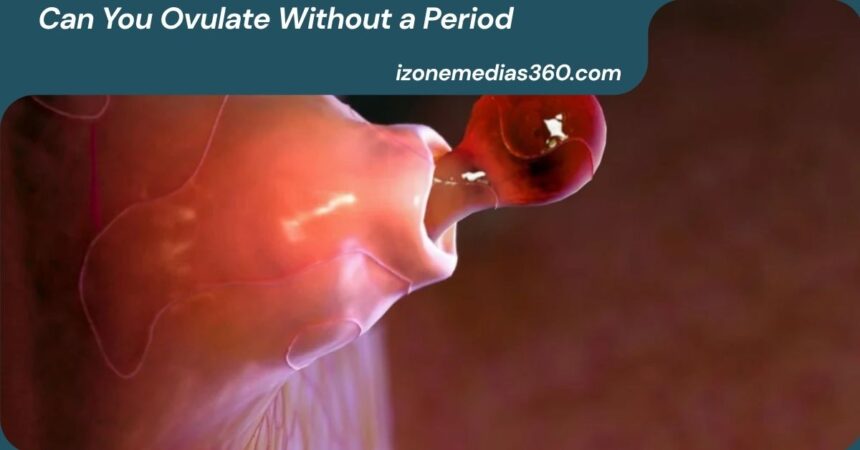
If you are wondering, “Can you ovulate without a period?” the short answer is yes. It is possible to ovulate even when you do not have regular menstrual bleeding, although the reason for the missing period matters.
Ovulation and menstruation are two different events in the menstrual cycle. Ovulation is when an ovary releases an egg. A period is the bleeding that usually happens when pregnancy does not occur after ovulation. Because ovulation happens before a period, it is possible for ovulation to occur unexpectedly after a missed or irregular period.
This is one reason fertility can be difficult to predict when menstrual cycles are irregular or absent.
In this guide, we will explain how ovulation works, whether you can ovulate without bleeding, what causes missed periods, how pregnancy can happen in this situation, and when it is a good idea to speak with a healthcare professional.
Can You Ovulate Without a Period?
Yes, you can ovulate without having a period first.
The important point is that ovulation normally happens before menstruation. If an egg is released and pregnancy does not occur, hormone levels later fall and menstrual bleeding usually begins. Therefore, if you have not had a period for some time, you may still ovulate before your next period arrives.
For example, someone may have irregular cycles and go several weeks or months without bleeding. If ovulation suddenly occurs during that time, pregnancy can be possible. If pregnancy does not occur, a period may follow approximately two weeks later, although the timing can vary.
This means that a missed period does not always mean that ovulation is not happening.

It also means that using periods alone to predict fertile days can be unreliable when cycles are irregular.
How Ovulation and Menstruation Are Connected
To understand whether you can ovulate without a period, it helps to understand the basic menstrual cycle.
The menstrual cycle involves several hormones and reproductive organs working together. The brain communicates with the ovaries through hormones. The ovaries develop follicles, and one follicle may eventually release an egg.

A simplified cycle looks like this:
- Menstruation begins.
- A follicle develops in an ovary.
- Hormone levels change as the follicle grows.
- Ovulation occurs when an egg is released.
- The body prepares for a possible pregnancy.
- If pregnancy does not occur, hormone levels decrease.
- Menstrual bleeding usually begins.
The exact length of each stage varies from person to person.
A common misunderstanding is that a period causes ovulation. In reality, ovulation generally happens before the next period.

That distinction is important when someone has irregular or absent periods.
Why Can Ovulation Happen Before a Period?
Ovulation is an event that can occur independently of whether you have recently experienced menstrual bleeding.
Suppose your period is late because your cycle has become unusually long. Your body may not have ovulated when you expected. Instead, ovulation may happen later.
For example:
- You expect a period on June 1.
- The period does not happen.
- Your cycle becomes longer than usual.
- Your ovaries eventually release an egg later in the cycle.
- If pregnancy does not occur, a period may come afterward.
In this situation, the person may think they “missed ovulation,” when they actually ovulated later than expected.
This is particularly relevant for people with irregular menstrual cycles.
Can You Ovulate Without Bleeding?
Yes. Ovulation does not require a period to happen immediately beforehand.
Menstrual bleeding is not a reliable signal that an egg has been released. Some people may experience very irregular bleeding, while ovulation occurs at unpredictable times.
There can also be situations in which someone has bleeding that is not a true menstrual period. Spotting, breakthrough bleeding, hormonal bleeding, and other types of bleeding can sometimes be mistaken for a normal period.
For this reason, bleeding alone cannot always tell you whether ovulation occurred.
Can You Ovulate Without Having Regular Periods?
Yes.
Irregular periods do not automatically mean that you never ovulate. Some people with irregular cycles ovulate occasionally but not on a predictable schedule.
Others may have cycles in which ovulation does not occur at all. This is called anovulation.
The challenge is that you usually cannot know whether ovulation happened simply by looking at the calendar.
Someone may have:
- Regular periods and regular ovulation
- Irregular periods and occasional ovulation
- Irregular periods with frequent anovulatory cycles
- No periods and occasional ovulation
- No periods because of pregnancy or another condition
The underlying cause makes a major difference.
What Does Anovulation Mean?
Anovulation means that ovulation does not occur.
During an anovulatory cycle, the ovary does not release an egg. Without ovulation, natural conception cannot occur during that particular cycle.
Anovulation can be temporary or ongoing.
Possible causes include:
- Polycystic ovary syndrome (PCOS)
- Major changes in body weight
- Very intense exercise
- Significant stress
- Certain hormonal conditions
- Thyroid disorders
- Elevated prolactin
- Perimenopause
- Some medications
- Certain reproductive health conditions
Anovulation is one reason someone may have irregular or absent periods.
However, having no period does not prove that you are not ovulating. Ovulation can occasionally happen unexpectedly.
Can You Ovulate Without a Period and Get Pregnant?
Yes.
This is one of the most important reasons the answer to “can you ovulate without a period?” matters.
Because ovulation happens before menstruation, pregnancy can occur before the first period after a long gap.
If an egg is released and sperm is present in the reproductive tract around the fertile window, fertilization can occur.
This means a person who has not had a period for several weeks or months may still become pregnant if ovulation occurs.
A missing period should therefore not automatically be treated as proof that pregnancy is impossible.
Can You Get Pregnant Without Having a Period?
Yes, depending on why the period is absent.
Pregnancy requires ovulation, but it does not require a previous menstrual period.
If ovulation occurs after a period has been absent, conception may occur. The resulting pregnancy would then prevent the expected menstrual period from occurring.
This is especially important for people who have irregular cycles.
For example, someone may think:
“I haven’t had a period in two months, so pregnancy cannot happen.”
That conclusion is not necessarily correct.
If ovulation occurred during that time, pregnancy could be possible.
Can You Ovulate Without a Period After Stopping Birth Control?
It depends on the type of birth control and how your body responds after stopping it.
Some hormonal contraceptives prevent ovulation while they are being used. After stopping them, normal ovarian activity may return at different rates.
Some people begin ovulating quickly. Others take longer to return to their previous cycle pattern.
The return of menstrual bleeding and the return of ovulation do not always happen at exactly the same time.
Therefore, if you have stopped hormonal birth control and your period has not returned, do not automatically assume that ovulation cannot happen.
If pregnancy is not desired, use an appropriate contraceptive method according to medical advice.
Can You Ovulate Without a Period While Breastfeeding?
Yes, it is possible.
Breastfeeding can affect reproductive hormones and may delay ovulation and menstrual periods. However, ovulation can return before the first postpartum period.
This is important because a person can become pregnant before seeing their first period after giving birth.
Breastfeeding can sometimes be used as a form of contraception under specific conditions, known as the lactational amenorrhea method (LAM). However, it has strict requirements and is intended for a limited period after childbirth.
Anyone relying on breastfeeding for pregnancy prevention should understand the conditions carefully and consider discussing contraception with a healthcare professional.
Can You Ovulate Without a Period During Perimenopause?
Yes.
Perimenopause is the transition toward menopause. During this stage, menstrual cycles often become irregular.
A person may go months without a period and still occasionally ovulate.
This can make pregnancy prevention complicated. Until menopause has been confirmed according to medical guidance, pregnancy may still be possible.
Perimenopause can also cause changes such as:
- Longer cycles
- Shorter cycles
- Skipped periods
- Changes in menstrual flow
- Hot flashes
- Sleep changes
- Mood changes
Not everyone experiences the same symptoms.
Can You Ovulate Without a Period After Giving Birth?
Yes.
Ovulation may return before the first postpartum period.
The timing varies widely and can be influenced by whether the person is breastfeeding.
Because the first ovulation may happen before the first postpartum period, someone can become pregnant without first seeing a new menstrual period.
Anyone who does not want another pregnancy soon after childbirth should discuss suitable contraception with a healthcare professional.
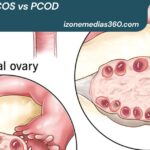
Can You Ovulate Without a Period Because of PCOS?
Possibly.
PCOS is a common hormonal condition associated with irregular menstrual cycles and problems with ovulation.
Some people with PCOS ovulate occasionally, while others may ovulate infrequently or experience anovulation.
This means that having PCOS does not necessarily mean that ovulation never happens.
A person with PCOS who has irregular periods may therefore have difficulty predicting fertile days.
If pregnancy is desired, a healthcare professional can evaluate ovulation and discuss treatment options when appropriate.
What Causes a Missed or Absent Period?
There are many possible causes of a missed period.
Some are temporary, while others require medical evaluation.
Common possibilities include:
Pregnancy
Pregnancy is one of the first things to consider when a period is unexpectedly absent in someone who could become pregnant.
Stress
Significant physical or emotional stress can affect the hormones that control ovulation.
Changes in Body Weight
Rapid weight loss, very low body weight, or significant weight gain can affect reproductive hormones.
Heavy Exercise
High levels of physical training can interfere with normal reproductive hormone patterns in some people.
PCOS
PCOS can cause irregular or absent periods because ovulation may happen less often.
Thyroid Problems
Both an underactive thyroid and an overactive thyroid can affect menstrual cycles.
High Prolactin
Elevated prolactin can interfere with reproductive hormone signaling and may affect periods and ovulation.
Perimenopause
Hormonal changes during the years leading up to menopause can cause irregular cycles.
Medications
Certain medications can influence menstrual cycles.
Other Medical Conditions
Some reproductive, endocrine, or general health conditions can affect menstruation.
Because there are many possible causes, persistent absent periods should not simply be ignored.
How Do You Know If You Are Ovulating Without a Period?
It can be difficult to know for certain without medical testing.
Some people notice possible signs of ovulation, such as:
- Changes in cervical mucus
- A small rise in basal body temperature after ovulation
- Mild pelvic discomfort
- Breast tenderness
- Changes in libido
- Changes in mood or energy
However, these symptoms are not proof of ovulation.
Some people have no noticeable symptoms at all.
Ovulation Predictor Kits
Ovulation predictor kits detect luteinizing hormone (LH) in urine.
An LH surge often happens shortly before ovulation. A positive test suggests that ovulation may be approaching, but it does not guarantee that an egg was actually released.
This distinction can be especially important for people with PCOS or irregular cycles, because hormone patterns can sometimes make interpretation more difficult.
Basal Body Temperature
Basal body temperature tracking can show a temperature rise that commonly occurs after ovulation.
The limitation is that it generally confirms a pattern after ovulation rather than predicting it with certainty beforehand.
Cervical Mucus
Cervical mucus often becomes thinner, clearer, and more slippery around the fertile window.
This can provide useful information about hormonal changes, but it is not a definitive medical test for ovulation.
Blood Testing
A healthcare professional can sometimes use hormone testing to assess whether ovulation occurred.
The timing of testing matters, especially when cycles are irregular.
Ultrasound Monitoring
In some fertility evaluations, ultrasound can be used to monitor ovarian follicles and help determine whether ovulation is occurring.
This is generally performed under medical supervision.
Can a Pregnancy Test Be Positive Before a Period?
Yes.
Pregnancy tests detect human chorionic gonadotropin (hCG), a hormone produced during pregnancy.
Because ovulation occurs before the next expected period, pregnancy may be detectable before the period would normally arrive, depending on the timing of ovulation, implantation, and testing.
However, testing too early can produce a negative result even when pregnancy is present.
If your period is missing and pregnancy is possible, follow the instructions on the pregnancy test and consider repeating the test if the first result is negative but the period remains absent.
What If You Missed Your Period but Think You Are Ovulating?
This situation can happen when ovulation is delayed.
If you are tracking fertility signs and notice changes that suggest ovulation even though you have not had a period, the safest interpretation is that your cycle may be irregular rather than assuming that ovulation is impossible.
If pregnancy is possible, consider taking a pregnancy test.
If you are trying to avoid pregnancy, remember that an unpredictable cycle can make calendar-based fertility tracking less reliable.
If you are trying to become pregnant, irregular or absent periods may be a reason to discuss your cycle with an obstetrician-gynecologist (OB-GYN) or fertility specialist.
Does Ovulation Always Lead to a Period?
Usually, if pregnancy does not occur, menstrual bleeding follows ovulation. However, the exact timing can vary.
There can also be exceptions involving hormonal conditions, pregnancy, medications, and other health factors.
A person who has irregular bleeding may not always recognize the bleeding as a typical period.
Therefore, the absence of a period does not necessarily tell you what happened during the previous part of the cycle.
Can You Ovulate Twice Without a Period?
The biology of ovulation is more complicated than simply counting eggs.
In some cycles, more than one egg can be released during the same general ovulatory event. This is one way fraternal twins can occur.
However, releasing eggs at widely separated times during the same cycle is not the same as having two completely separate menstrual cycles.
People should not assume that multiple fertility signs automatically mean that they have ovulated twice.
Does Having No Period Mean You Are Not Fertile?
No.
Fertility depends heavily on whether ovulation is occurring, not simply whether menstrual bleeding is visible.
A person without regular periods may have reduced fertility because ovulation is irregular. But reduced predictability is not the same as zero fertility.
This is why absent or irregular periods should not automatically be interpreted as natural contraception.
Can You Ovulate Without a Period and Not Know It?
Yes.
Some people experience few or no noticeable ovulation symptoms.
If periods are irregular, it becomes even harder to estimate when ovulation may occur.
This can create an important problem: someone may believe they are outside their fertile window when they are actually approaching ovulation.
For people who want to avoid pregnancy, using a reliable contraceptive method is generally more dependable than relying only on menstrual timing.
What Is Amenorrhea?
Amenorrhea is the medical term for the absence of menstrual periods.
It can be divided broadly into two categories.
Primary Amenorrhea
Primary amenorrhea refers to not having a first menstrual period by an age when medical evaluation would normally be recommended.
The specific age and circumstances matter, so healthcare professionals assess the individual’s development and medical history.
Secondary Amenorrhea
Secondary amenorrhea means that someone who previously had periods stops having them for a significant period.
Pregnancy is an important possible cause, but it is not the only one.
Other causes can include hormonal disorders, PCOS, major weight changes, intense exercise, stress, medications, and changes associated with perimenopause.
Persistent amenorrhea should be evaluated rather than assumed to be normal.
When Should You See a Doctor About No Periods?
Consider speaking with a healthcare professional if your periods repeatedly disappear, become very irregular, or change significantly without an obvious explanation.
Medical evaluation is particularly important if absent periods occur with symptoms such as:
- Severe pelvic pain
- Heavy or unusual bleeding
- New vision problems
- Severe headaches
- Unusual breast discharge
- Major unexplained weight changes
- Signs of excess androgen, such as new facial hair or severe acne
- Symptoms suggesting thyroid problems
- Possible pregnancy
A healthcare professional may ask about your menstrual history, medications, lifestyle, weight changes, pregnancy possibility, and other symptoms.
Depending on the situation, they may recommend pregnancy testing, blood tests, or imaging.
When Is a Missed Period an Emergency?
A missed period by itself is usually not an emergency.
However, urgent medical attention may be needed when a missed period or positive pregnancy test occurs together with severe symptoms.
For example, severe abdominal or pelvic pain, fainting, dizziness, shoulder pain, or significant bleeding during a possible pregnancy can require urgent evaluation because some pregnancy complications can be serious.
If symptoms are severe or you feel that something is seriously wrong, seek emergency medical care.
Can You Track Ovulation If Your Periods Are Irregular?
Yes, but it can be more challenging.
People with irregular cycles may use several methods together rather than relying on a calendar.
Possible methods include:
- Tracking cervical mucus
- Using ovulation predictor kits
- Recording basal body temperature
- Tracking symptoms
- Medical hormone testing
- Ultrasound monitoring when recommended
Combining information can provide a clearer picture, but no home method is perfect.
If pregnancy is the goal and ovulation is difficult to predict, medical guidance may be useful.
Can Irregular Periods Affect Pregnancy?
They can.
Irregular periods often indicate that ovulation is irregular or unpredictable. If ovulation happens less often, there may be fewer opportunities for conception.
However, irregular periods do not automatically mean infertility.
Many causes of irregular ovulation can be identified and treated or managed.
For someone trying to conceive, understanding the cause of irregular periods can be more useful than focusing only on the number of days between periods.
Can You Have Ovulation Symptoms Without Actually Ovulating?
Yes.
Symptoms associated with hormonal changes can occur even when an egg is not ultimately released.
For example, a person may notice changes in cervical mucus or other symptoms because hormone levels are changing, but the follicle may not successfully release an egg.
This is one reason symptoms alone cannot confirm ovulation.
The body can sometimes go through part of the hormonal process associated with ovulation without completing ovulation.
What Is the Difference Between Ovulation and Menstruation?
The simplest distinction is:
| Ovulation | Menstruation |
|---|---|
| An egg is released from an ovary | The uterine lining is shed |
| Usually happens before the next period | Usually follows a cycle in which pregnancy did not occur |
| Creates the possibility of conception | Is not required for ovulation to occur first |
| Can happen even when periods are irregular | May be absent for many reasons |
Understanding this difference helps explain why someone can ovulate without first having a recent period.
Can You Ovulate Without a Period After a Long Gap?
Yes.
A long gap between periods does not necessarily mean that ovulation cannot happen.
For example, someone might go two or three months without bleeding because ovulation has been delayed. Eventually, the hormonal cycle may restart and ovulation can occur.
If pregnancy does not occur, menstrual bleeding may follow.
If pregnancy does occur, there may be no period because pregnancy prevents the normal menstrual cycle from continuing.
This is why an absent period and unpredictable ovulation can sometimes occur together.
How Pregnancy Can Happen Before the First Period
The sequence is important.
Imagine that someone has not had a period for several weeks. Their ovaries then release an egg unexpectedly.
If fertilization occurs, pregnancy begins.
Because the period would normally occur after ovulation if pregnancy did not happen, the person may never experience the “missing period” they were expecting.
In other words, the first ovulation after a period-free interval can occur before the first subsequent period.
This is one of the clearest answers to the question, “Can you ovulate without a period?”
Does a Negative Pregnancy Test Rule Out Pregnancy?
Not always, particularly if testing is done too early.
Pregnancy tests are more useful when taken at an appropriate time. If the test is negative but your period remains absent and pregnancy is still possible, follow the test manufacturer’s guidance about repeating the test or speak with a healthcare professional.
If you have irregular cycles, identifying the correct testing time can be more difficult because you may not know when ovulation occurred.
What Healthcare Professionals May Check
When someone has absent or irregular periods, a healthcare professional may first determine whether pregnancy is possible.
They may then consider other causes.
Depending on the situation, evaluation may include:
- Medical and menstrual history
- Physical examination
- Pregnancy testing
- Thyroid testing
- Prolactin testing
- Other reproductive hormone tests
- Assessment for PCOS
- Pelvic ultrasound
- Review of medications
- Evaluation of nutritional and exercise patterns
Not everyone needs every test.
The appropriate evaluation depends on age, symptoms, medical history, and the length and pattern of menstrual changes.
Common Myths About Ovulation Without a Period
Myth 1: You Cannot Ovulate Until You Have a Period
This is incorrect.
Ovulation generally happens before the next period, so a person can ovulate after a period-free interval and before experiencing another period.
Myth 2: No Period Means No Pregnancy Risk
This is also incorrect.
If ovulation occurs, pregnancy may be possible.
Myth 3: Irregular Periods Always Mean Infertility
Not necessarily.
Irregular cycles can make conception more difficult to predict, but some people with irregular periods still ovulate and become pregnant.
Myth 4: Ovulation Symptoms Prove Ovulation Happened
Not necessarily.
Symptoms can suggest hormonal changes, but they cannot always confirm that an egg was released.
Myth 5: One Negative Pregnancy Test Always Ends the Question
Timing matters.
A test performed too early may not detect a pregnancy.
How to Think About Fertility When You Have No Period
A useful way to think about this situation is to separate three questions:
- Why is the period absent?
- Is ovulation occurring?
- Is pregnancy possible or desired?
These questions are connected but not identical.
For example, someone may have no periods because they are breastfeeding and still eventually ovulate.
Another person may have absent periods because of a hormonal disorder and may not be ovulating regularly.
A third person may have a missed period because of pregnancy.
The same symptom can therefore have very different explanations.
If You Are Trying to Avoid Pregnancy
If your menstrual cycle is irregular or absent, calendar-based methods may be difficult to use accurately.
Because ovulation can occur unexpectedly, the absence of a period should not be treated as proof that you are infertile.
A healthcare professional can help you choose a contraceptive method based on your health, preferences, and pregnancy plans.
If You Are Trying to Get Pregnant
If your periods are irregular or absent, it may be difficult to identify fertile days.
Rather than assuming that you never ovulate, consider discussing the pattern with an OB-GYN or fertility specialist.
A healthcare professional can determine whether ovulation is occurring and investigate possible causes of irregular cycles.
Treatment depends on the underlying cause and whether pregnancy is desired.
Can You Ovulate Without a Period? Key Takeaways
The most important points are simple:
- Yes, you can ovulate without having a recent period.
- Ovulation usually occurs before the next menstrual period.
- A missed period does not automatically mean that ovulation is impossible.
- Pregnancy can occur from an unexpected ovulation.
- Irregular periods may occur with irregular ovulation or anovulation.
- PCOS, breastfeeding, perimenopause, stress, weight changes, exercise, thyroid problems, and other conditions can affect periods.
- Ovulation symptoms do not always prove that ovulation occurred.
- Home ovulation tests can provide useful information but are not perfect.
- Persistent absent or highly irregular periods deserve medical evaluation.
- A pregnancy test may be appropriate when pregnancy is possible.
Frequently Asked Questions About Ovulation Without a Period
1. Can you ovulate without having any menstrual bleeding for several months?
Yes. If ovulation has been delayed, it can occur after a long period without bleeding. Menstrual bleeding would generally occur later if pregnancy does not happen. The reason for the missing periods is important, so persistent amenorrhea should be discussed with a healthcare professional.
2. Can ovulation happen immediately after a missed period?
A “missed period” can sometimes mean that ovulation was delayed rather than that the cycle simply stopped. If ovulation occurs later than expected, it may happen after the date when a period was originally expected. Calendar predictions become less reliable when cycles are irregular.
3. Can you have a normal pregnancy after not having periods for a long time?
Yes, depending on the cause of the absent periods. If ovulation resumes and conception occurs, pregnancy can happen. However, long-term absent periods may also be linked to conditions that affect fertility, so medical evaluation can be helpful.
4. Can an ovulation test be positive if you do not have periods?
Yes. An ovulation predictor test detects an LH surge, not menstrual bleeding. A positive result can occur even when periods have been irregular or absent. However, an LH surge does not always guarantee that ovulation actually occurred.
5. Can you ovulate without a period because of hormonal changes?
Yes. Hormonal changes can alter the timing of both ovulation and menstruation. Conditions such as PCOS, breastfeeding, perimenopause, thyroid disorders, changes in prolactin, and major changes in weight or exercise can affect reproductive hormone patterns.
Conclusion
So, can you ovulate without a period? Yes. It is biologically possible to ovulate without having a recent menstrual period because ovulation generally happens before the next period, not after it.
This is especially important when menstrual cycles are irregular or absent. A person may go weeks or months without bleeding and then unexpectedly ovulate. If pregnancy is possible, conception can occur before the next period ever appears.
At the same time, not having periods can have many causes. PCOS, pregnancy, breastfeeding, perimenopause, stress, weight changes, intense exercise, thyroid disorders, medications, and other health conditions can all affect menstrual cycles.
If your periods are repeatedly absent, very irregular, or accompanied by concerning symptoms, a healthcare professional can help identify the cause and determine whether you are ovulating. Understanding the difference between ovulation and menstruation is the key to understanding fertility when periods are unpredictable.