



An artificial insemination essay can help readers understand one of the fertility treatments used by people who are trying to become pregnant. Artificial insemination is a medical procedure that places prepared sperm into the reproductive tract to increase the possibility of fertilization. In modern fertility care, the term most often refers to intrauterine insemination, commonly called IUI.
IUI is a relatively simple fertility treatment. During the procedure, prepared sperm is placed directly into the uterus around the time of ovulation. The goal is to make it easier for sperm to reach an egg. Unlike in vitro fertilization, IUI does not normally involve removing eggs from the ovaries or fertilizing an egg in a laboratory.
Artificial insemination may be considered for several reasons. These can include unexplained infertility, mild male-factor infertility, problems with ovulation, the use of donor sperm, and situations in which pregnancy through intercourse is difficult or not possible.
However, artificial insemination does not guarantee pregnancy. Its potential success depends on several factors, including age, ovulation, sperm quality, fallopian tube function, the cause of infertility, and the treatment plan.
This artificial insemination essay explains how the procedure works, who may benefit from it, what happens during treatment, possible benefits and risks, costs, donor sperm, legal considerations, privacy concerns, and how artificial insemination compares with other fertility treatments.
What Is Artificial Insemination?
Artificial insemination is a fertility treatment in which prepared sperm is placed into the reproductive tract to increase the chance of pregnancy.
The most common modern form is intrauterine insemination, or IUI.
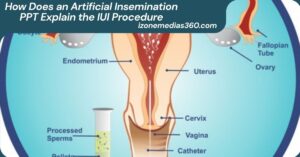
During IUI, sperm is prepared in a laboratory and then placed into the uterus using a thin medical catheter. The procedure is timed to occur close to ovulation.

The purpose is to give sperm a more direct path toward the fallopian tubes, where fertilization can occur if an egg is available.
Artificial insemination is different from IVF.
With IUI, fertilization normally happens inside the body. With IVF, eggs are retrieved from the ovaries and fertilization takes place in a laboratory before an embryo is transferred to the uterus.
Artificial Insemination Meaning in Simple Words
In simple terms, artificial insemination means using a medical procedure to place prepared sperm into the reproductive tract at an appropriate time in the menstrual cycle.
The procedure does not create a pregnancy by itself.
After insemination, sperm must still fertilize an egg. The resulting embryo must then develop normally and implant in the uterus.

This means that several biological steps must occur after the procedure.
How Does Artificial Insemination Work?
The artificial insemination process usually includes several stages.
The exact treatment plan can be different for each person.
1. Fertility Evaluation
Before IUI, a fertility specialist usually evaluates both reproductive partners when applicable.
Testing may include:
- Medical history
- Menstrual-cycle history
- Ovulation assessment
- Blood tests
- Semen analysis
- Ultrasound
- Uterine evaluation
- Fallopian tube evaluation
The purpose of these tests is to understand why pregnancy has not occurred and determine whether IUI is a reasonable treatment.
For people under 35, an infertility evaluation is commonly recommended after 12 months of regular attempts to become pregnant. For people 35 and older, evaluation is generally considered after six months. People over 40 may benefit from discussing fertility evaluation sooner.
The timing can also be different when there are known fertility problems or other medical concerns.
2. Monitoring Ovulation
Timing is a key part of artificial insemination.
IUI works best when sperm is placed near the time an egg is released.
A fertility clinic may monitor ovulation using:
- Ultrasound
- Blood hormone testing
- Urine ovulation tests
- Menstrual-cycle tracking
Ultrasound can help the medical team observe ovarian follicles and determine how they are developing.
3. Fertility Medication
Some people have IUI during a natural cycle, while others use medication to stimulate ovulation.
Fertility medication may be used when ovulation is irregular or when a doctor believes controlled ovarian stimulation may improve the treatment plan.
Different medications work in different ways.
Some medicines encourage the development of follicles. Other medications may be used to help control the timing of ovulation.
Fertility medication requires medical supervision because producing too many mature follicles can increase the chance of multiple pregnancy.
4. Sperm Preparation
Before IUI, the sperm sample is processed by a fertility laboratory.
The purpose is generally to prepare a concentrated sample containing sperm with useful movement.
The sperm may come from:
- A partner
- A sperm donor
- A sperm bank
The laboratory process can vary depending on the clinic and the type of sperm being used.
5. The Insemination Procedure
Once ovulation timing has been determined, the prepared sperm is placed into the uterus.
A healthcare professional usually uses a thin catheter that passes through the cervix.
The procedure is generally short.
Some people experience mild cramping or pressure, while others experience little discomfort.
6. Pregnancy Testing
After insemination, patients normally wait before taking a pregnancy test.
Testing too early can sometimes produce an inaccurate or confusing result.
A fertility clinic will generally explain when pregnancy testing should be performed.
Who May Benefit From Artificial Insemination?
Artificial insemination may be helpful for some people with specific fertility challenges.
Unexplained Infertility
Sometimes fertility testing does not reveal a clear reason for infertility.
This is called unexplained infertility.
In such cases, IUI may be considered because it places prepared sperm closer to the area where fertilization can occur.
Mild Male-Factor Infertility
Male fertility can be affected by sperm count, movement, shape, and other factors.
IUI may sometimes be considered when sperm problems are mild.
If sperm quality is severely reduced, another treatment such as IVF with specialized sperm injection may be more appropriate.
Ovulation Problems
Some people do not ovulate regularly.
Without ovulation, there may be no egg available for fertilization.
Fertility medication can sometimes help regulate or stimulate ovulation.
IUI may then be performed around the expected time of egg release.
Donor Sperm
Donor sperm is another reason people may consider artificial insemination.
Donor sperm may be used by individuals or couples who need donor sperm to attempt pregnancy.
The use of donor sperm involves additional medical, genetic, emotional, and legal considerations.
Difficulty With Intercourse
Some people cannot achieve pregnancy through intercourse because of physical, medical, or reproductive circumstances.
In these situations, a fertility specialist may discuss IUI or other fertility options.
When May Artificial Insemination Not Be Recommended?
IUI is not suitable for every fertility problem.
A doctor may recommend another treatment if there is:
- Significant blockage of the fallopian tubes
- Severe sperm-factor infertility
- Certain severe forms of endometriosis
- Significant reduction in ovarian function
- Other medical conditions that make IUI unlikely to work
One important limitation is that IUI does not bypass the fallopian tubes.
For natural fertilization to occur after IUI, sperm and egg generally need access to a functioning fallopian tube.
IVF can sometimes be a better option when the fallopian tubes are blocked because fertilization occurs outside the body.
Artificial Insemination vs. IVF
Artificial insemination and IVF are different fertility treatments.
Artificial Insemination
With IUI:
- Ovulation is monitored.
- Sperm is prepared.
- Prepared sperm is placed into the uterus.
- Fertilization normally occurs inside the body.
- If fertilization and implantation are successful, pregnancy develops.
IVF
With IVF:
- Medication is commonly used to stimulate the ovaries.
- Eggs are collected from the ovaries.
- Eggs and sperm are combined in a laboratory.
- Fertilization takes place outside the body.
- An embryo is transferred into the uterus.
The major difference is that IUI brings sperm closer to the egg, while IVF involves laboratory handling of eggs and embryos.
Artificial Insemination Success Rate
One of the most frequently searched questions is: “What is the artificial insemination success rate?”
There is no single success rate that applies to every patient.
The chance of pregnancy can depend on:
- Age
- Egg quality
- Ovulation
- Sperm quality
- Number of mature follicles
- Fallopian tube health
- Cause of infertility
- Use of fertility medication
- Previous fertility treatment
- General reproductive health
A younger patient with regular ovulation and favorable sperm characteristics may have a different outcome from someone with advanced reproductive age or several fertility challenges.
It is also important to understand the difference between pregnancy rate and live-birth rate.
A positive pregnancy test does not always result in a live birth.
For this reason, patients should ask fertility clinics exactly what their reported success numbers mean.
Benefits of Artificial Insemination
Artificial insemination has several possible advantages.
It Is Less Invasive Than IVF
IUI usually does not require surgical egg retrieval.
This can make the procedure simpler than IVF for appropriate patients.
It Can Be Used With Donor Sperm
People who need donor sperm may use IUI as one pathway to pregnancy.
It Can Be Combined With Ovulation Treatment
For people with ovulation problems, IUI may be combined with medication and monitoring.
The Procedure Is Usually Brief
The actual insemination usually takes only a short time.
The preparation and monitoring process takes longer, but the insemination itself is generally quick.
It May Cost Less Than IVF
IUI usually costs less per treatment cycle than IVF.
However, repeated IUI cycles can add to the total cost.
Risks of Artificial Insemination
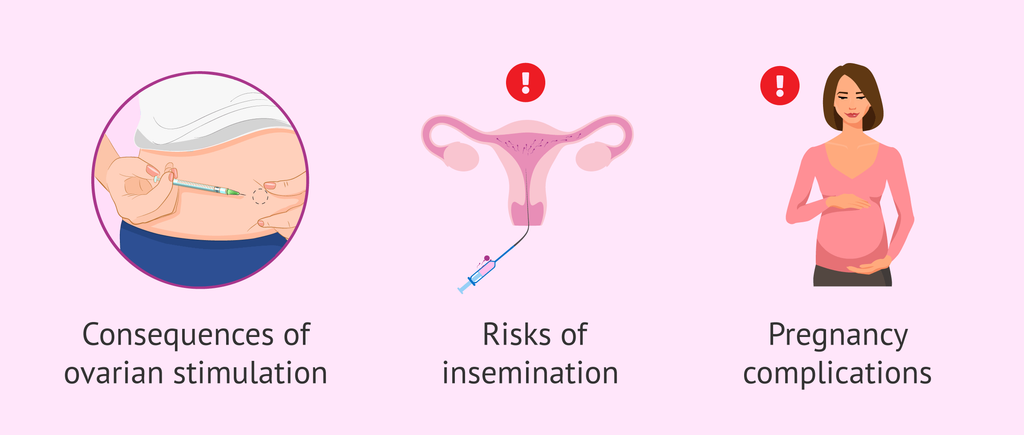
Artificial insemination is generally considered a relatively low-risk procedure, but it still has potential risks.
Mild Cramping
Some patients experience mild cramping during or shortly after IUI.
Spotting
Light spotting may occur after the catheter is placed through the cervix.
Infection
Infection is uncommon but possible with medical procedures involving the reproductive tract.
Multiple Pregnancy
Multiple pregnancy is an important risk when fertility medication is used.
If several eggs mature, there may be an increased chance of twins or a higher-order multiple pregnancy.
Multiple pregnancies can involve greater health risks during pregnancy and birth.
Ovarian Hyperstimulation
Some fertility medicines can cause ovarian hyperstimulation.
Possible symptoms can include:
- Abdominal discomfort
- Bloating
- Nausea
- Enlarged ovaries
- Fluid buildup
Severe cases can require medical treatment.
Emotional Stress
Fertility treatment can also create emotional pressure.
Patients may experience:
- Anxiety
- Disappointment
- Stress
- Frustration
- Sadness
- Financial concerns
- Relationship pressure
Emotional support can be an important part of fertility care.
Is Artificial Insemination Painful?
Most people do not experience severe pain during IUI.
The experience can vary.
Some patients report:
- Mild cramping
- Pressure
- Temporary discomfort
- Light spotting
The catheter passes through the cervix, so some people may feel more discomfort than others.
Severe or persistent pain should be discussed with a healthcare professional.
How Long Does Artificial Insemination Take?
The actual insemination procedure is usually brief.
However, an entire treatment cycle can take several weeks.
The complete process may include:
- Menstrual-cycle tracking
- Medication
- Ultrasound
- Blood testing
- Ovulation monitoring
- Sperm preparation
- Insemination
- Pregnancy testing
Therefore, the procedure itself is short, but preparation and follow-up require more time.
Artificial Insemination With Donor Sperm
Donor sperm can be an important part of fertility treatment.
People using donor sperm should understand the medical screening and storage process.
Donor sperm obtained through established fertility clinics and sperm banks is generally subject to screening procedures designed to reduce the risk of transmitting infectious diseases.
Screening may include testing for several infections and collecting information about the donor’s medical history.
However, no screening system can remove every possible medical or genetic risk.
Patients should ask about:
- Infectious disease testing
- Genetic screening
- Donor medical history
- Family medical history
- Storage procedures
- Donor identification policies
- Future contact policies
- Record keeping
Choosing Donor Sperm
Choosing donor sperm can involve more than medical decisions.
Patients may consider:
- Physical characteristics
- Medical history
- Genetic information
- Family health history
- Donor screening
- Identity-release policies
- Storage arrangements
- Number of families using a donor
- Future information-sharing policies
A reputable fertility clinic or sperm bank can explain its screening and documentation procedures.
Patients should also understand that donor anonymity may not remain absolute forever.
Advances in consumer genetic testing and online family-matching services may make it possible for people to discover biological relationships in the future.
Known Donor Considerations
Some people consider using sperm from someone they know.
This can create additional legal and emotional concerns.
A known donor arrangement may involve questions about:
- Legal parentage
- Donor rights
- Parental rights
- Future contact
- Financial responsibility
- Medical information
- Written agreements
State laws differ across the United States.
People considering a known donor should speak with a qualified reproductive-law attorney before proceeding.
A private agreement does not necessarily provide the same legal protection in every state.
Artificial Insemination and U.S. Legal Issues
Legal considerations are an important part of fertility treatment in the United States.
Rules can vary between states.
Legal questions may involve:
- Donor parentage
- Known donors
- Anonymous donors
- Same-sex parents
- Birth certificates
- Donor agreements
- Storage of reproductive material
- Future donor contact
Medical treatment does not automatically determine legal parentage.
For people using donor sperm, professional legal advice can be especially important when the donor is known personally.
Privacy and Artificial Insemination
Fertility treatment involves sensitive personal information.
Medical records may contain:
- Fertility test results
- Menstrual-cycle information
- Hormone results
- Semen-analysis results
- Genetic information
- Donor information
- Pregnancy results
- Insurance information
Patients should consider carefully what they share online.
Protecting Fertility Information Online
Avoid publicly posting:
- Complete medical records
- Personal identification information
- Clinic account details
- Insurance information
- Donor documents
- Private genetic information
- Login information
Fertility-related social media groups can provide emotional support, but they should not replace professional medical advice.
Genetic Privacy
Genetic testing has changed the concept of donor anonymity.
Even when a donor was originally described as anonymous, future genetic databases may allow biological relationships to become easier to identify.
This is an important issue for anyone considering donor conception.
History of Artificial Insemination
Artificial insemination has a long history in reproductive medicine.
Early attempts at assisted insemination were reported many years ago. Over time, medical knowledge about reproduction improved.
Advances in reproductive medicine eventually led to better methods for:
- Sperm collection
- Sperm preparation
- Sperm storage
- Cryopreservation
- Ovulation monitoring
- Hormone treatment
- Ultrasound
- Fertility laboratory procedures
The development of sperm freezing was especially important because it made it easier to store and use donor sperm.
Modern IUI is therefore the result of many years of progress in reproductive medicine.
Tests Before Artificial Insemination
Doctors may recommend several tests before beginning IUI.
Semen Analysis
A semen analysis can provide information about:
- Sperm count
- Sperm concentration
- Sperm movement
- Sperm shape
- Semen volume
The results can help determine whether IUI is appropriate.
Ovulation Testing
Ovulation may be assessed with:
- Blood tests
- Urine testing
- Ultrasound
- Cycle tracking
Ovarian Reserve Testing
Some patients may have testing to estimate ovarian reserve.
This can provide useful information for treatment planning, although ovarian reserve tests cannot perfectly predict natural pregnancy or fertility-treatment success.
Fallopian Tube Testing
Because IUI generally requires at least one functioning fallopian tube, doctors may recommend testing to determine whether the tubes are open.
The specific test depends on the patient’s medical history.
Factors That Affect IUI Success
The artificial insemination procedure is only one part of fertility treatment.
Several factors can influence outcomes.
Age
Age is an important factor because egg quality generally changes over time.
This is one reason fertility evaluation can become more important as age increases.
Ovulation
A mature egg must be available for fertilization.
People with irregular or absent ovulation may need medication or additional treatment.
Sperm Quality
Sperm concentration and movement can affect whether IUI is appropriate.
Fallopian Tube Health
At least one functioning fallopian tube is generally important for fertilization following IUI.
Cause of Infertility
The underlying reason for infertility can affect the likely benefit of IUI.
Number of Follicles
When medication is used, the number of mature follicles can influence both pregnancy chances and the risk of multiple pregnancy.
How Many IUI Cycles Are Needed?
There is no universal number of IUI cycles that works for everyone.
Some people become pregnant after one cycle.
Others need several attempts.
If IUI does not result in pregnancy, the fertility specialist may review:
- Age
- Diagnosis
- Sperm quality
- Response to medication
- Number of mature follicles
- Previous treatment results
- Length of infertility
The doctor may recommend another IUI cycle or discuss another treatment, including IVF.
An unsuccessful IUI cycle does not automatically mean that pregnancy is impossible.
However, repeated unsuccessful cycles may be a reason to reassess the overall treatment strategy.
Artificial Insemination Cost in the United States
The cost of artificial insemination varies throughout the United States.
The total cost may include:
- Initial consultation
- Fertility testing
- Ultrasound
- Blood tests
- Fertility medication
- Sperm preparation
- IUI procedure
- Donor sperm
- Sperm storage
- Laboratory services
- Additional treatment cycles
IUI is usually less expensive than IVF, but multiple cycles can increase total spending.
Before treatment, patients should ask for an itemized cost estimate.
Insurance and Artificial Insemination
Insurance coverage for fertility treatment varies by state, employer, and insurance plan.
Some insurance plans may cover certain fertility evaluations or treatments, while others may provide little or no coverage.
Patients should ask their insurance company:
- Is infertility testing covered?
- Is IUI covered?
- Are fertility medications covered?
- Is donor sperm covered?
- Is IVF covered?
- Is prior authorization required?
- Are there limits on fertility treatment?
The fertility clinic may also have a financial counselor who can help explain expected expenses.
Artificial Insemination vs. Timed Intercourse
Timed intercourse and IUI are different approaches.
Timed intercourse involves planning intercourse around the fertile window.
IUI involves placing prepared sperm directly into the uterus.
For some people, timed intercourse may be an appropriate first approach.
For others, IUI may provide an additional advantage because prepared sperm is placed closer to the reproductive tract.
The right approach depends on the patient’s fertility situation.
Artificial Insemination vs. IVF: Comparison
| Feature | IUI | IVF |
| Sperm prepared | Yes | Yes |
| Eggs retrieved | No | Yes |
| Fertilization in laboratory | No | Yes |
| Embryos created in laboratory | No | Yes |
| Egg retrieval procedure | No | Usually |
| Overall complexity | Lower | Higher |
| Can bypass blocked tubes | No | Yes |
| Donor sperm can be used | Yes | Yes |
| Donor eggs can be used | No | Yes |
This comparison demonstrates why IUI and IVF are not interchangeable.
A fertility specialist considers the patient’s individual situation before recommending a treatment.
Common Myths About Artificial Insemination
Myth 1: Artificial Insemination Guarantees Pregnancy
It does not.
IUI increases the opportunity for sperm and egg to meet, but many biological steps are still required for pregnancy to occur.
Myth 2: IUI and IVF Are the Same
They are different.
IUI places prepared sperm into the uterus, while IVF involves retrieving eggs and fertilizing them in a laboratory.
Myth 3: Everyone Needs Fertility Medication for IUI
Not necessarily.
Some people have IUI during a natural cycle, while others use fertility medication.
Myth 4: Donor Sperm Is Not Screened
Donor sperm obtained through established medical channels undergoes screening and testing procedures intended to reduce certain medical risks.
Patients should ask their clinic about the specific screening process.
Myth 5: One Failed IUI Means Treatment Will Never Work
A single unsuccessful treatment cycle does not prove that pregnancy is impossible.
Fertility is influenced by many factors, and treatment plans can be reassessed after each cycle.
How to Prepare for Artificial Insemination
Preparation depends on the treatment plan.
Helpful steps may include:
- Complete recommended fertility testing.
- Take prescribed medication as directed.
- Attend monitoring appointments.
- Track ovulation according to medical instructions.
- Understand the expected insemination date.
- Ask how sperm will be prepared.
- Discuss possible side effects.
- Understand the risk of multiple pregnancy.
- Review treatment costs.
- Confirm insurance coverage.
- Discuss donor-related issues if applicable.
- Ask when the pregnancy test should be taken.
Keeping a written list of questions can make fertility appointments easier.
Questions to Ask a Fertility Specialist
Before starting artificial insemination, patients may want to ask:
- Why is IUI recommended for me?
- What is the likely cause of infertility?
- Do I need fertility medication?
- How will ovulation be monitored?
- Are my fallopian tubes open?
- What do my semen-analysis results mean?
- What are my expected chances of pregnancy?
- What are the main risks?
- How many IUI cycles should we consider?
- When would IVF become a better option?
- What will treatment cost?
- What does my insurance cover?
- What donor screening is performed if donor sperm is being used?
- What legal issues should I consider?
These questions can help patients make informed decisions.
Emotional Health During Fertility Treatment
Infertility treatment is not only a physical experience.
It can also affect emotional well-being.
People may feel:
- Worried
- Hopeful
- Disappointed
- Frustrated
- Overwhelmed
- Sad
- Financially stressed
These feelings are common.
People may benefit from speaking with a counselor, therapist, support group, trusted friend, family member, or healthcare professional.
Partners should also communicate about expectations, treatment costs, donor decisions, and emotional needs.
There is no single “right” emotional response to fertility treatment.
Finding Reliable Fertility Information Online
The internet contains a large amount of fertility information, but not all of it is reliable.
People searching for artificial insemination information may encounter:
- Personal success stories
- Medical websites
- Fertility clinic advertisements
- Social media posts
- Online forums
- Influencer content
- Supplement advertisements
- Unverified treatment claims
Personal experiences can be useful for understanding what another person went through, but they cannot predict an individual’s fertility outcome.
Readers should be cautious about websites that promise guaranteed pregnancy or claim that one product can solve infertility for everyone.
Reliable fertility information should be based on established medical knowledge and presented by qualified professionals or reputable healthcare organizations.
Frequently Asked Questions About Artificial Insemination
1. Can artificial insemination be performed during a natural menstrual cycle?
Yes. IUI can sometimes be performed during a natural cycle when a person ovulates regularly. Other patients may use medication to stimulate or control ovulation. The choice depends on the individual’s fertility situation and treatment goals.
2. Can frozen sperm be used for artificial insemination?
Yes. Frozen sperm is commonly used in fertility treatment, especially when donor sperm is involved. The sperm is stored under controlled conditions and prepared by a fertility laboratory before insemination.
3. Can someone over age 40 have artificial insemination?
Yes, IUI may be considered for some people over 40. However, age can have a significant effect on fertility and treatment outcomes. A fertility specialist can evaluate the individual’s reproductive health and explain whether IUI or another approach is reasonable.
4. Can artificial insemination result in twins?
Yes. The possibility of twins or other multiple pregnancies can increase when fertility medication causes multiple eggs to mature. Careful monitoring can help doctors manage this risk.
5. Is artificial insemination considered assisted reproductive technology?
IUI is generally not classified as assisted reproductive technology in the same way as IVF because IUI does not normally involve laboratory handling of eggs or embryos. IVF involves egg retrieval and laboratory fertilization.
Conclusion
Artificial insemination is an important fertility treatment that can provide another pathway toward pregnancy for some individuals and couples.
Modern artificial insemination most commonly refers to intrauterine insemination, or IUI. During IUI, prepared sperm is placed into the uterus around the time of ovulation. Fertilization then normally takes place inside the body.
The treatment may be considered for unexplained infertility, mild male-factor infertility, some ovulation problems, donor sperm use, and certain situations in which intercourse is difficult or not possible.
One of the most important points is that IUI does not guarantee pregnancy. Success depends on many factors, including age, egg quality, ovulation, sperm quality, fallopian tube function, and the underlying cause of infertility.
IUI is generally simpler and less invasive than IVF, but it is not suitable for every fertility problem. People with significant fallopian tube blockage or severe infertility factors may need another treatment approach.
Artificial insemination also involves issues beyond the medical procedure. Costs, insurance, donor screening, genetic information, privacy, emotional health, and state-specific legal rules can all affect the treatment experience.
The best fertility plan is therefore an individualized one. Anyone considering artificial insemination should discuss their medical history, fertility testing, treatment choices, expected outcomes, risks, and costs with a qualified fertility professional.
Understanding how artificial insemination works can help patients approach fertility treatment with realistic expectations and make informed decisions about their reproductive goals.